Exploring the Cosmic Appeal of Watercolor Holographic Space Backgrounds
The Unique Character of This Digital Art Style
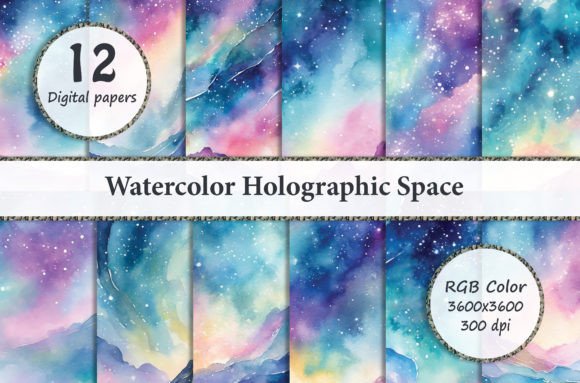
Watercolor holographic space backgrounds blend two distinct visual languages. They combine the soft, organic texture of watercolor painting with the futuristic, shimmering quality of holographic effects set against a cosmic backdrop. This creates a style that feels both artistic and digitally sophisticated. The visual personality is dreamy, ethereal, and slightly mysterious, with layers of color that shift and blend in ways that mimic real paint but with an otherworldly, iridescent sheen. The space elements—stars, nebulae, galaxies—provide depth and a sense of infinite possibility, while the watercolor treatment keeps the design grounded in a handcrafted, artistic tradition.
The overall appeal lies in this contrast. It’s not a flat digital gradient or a stock photo of space. It has texture, variation, and a sense of movement. The holographic aspect adds a modern, trendy edge that catches the eye, especially in digital contexts where screens can render those subtle color shifts. For designers and creators, this style offers a versatile foundation that can evoke wonder, creativity, and a touch of luxury without being overly literal or kitschy.
Where This Style Truly Shines
These backgrounds are incredibly versatile design assets. They work exceptionally well as a digital background for websites, especially for creative portfolios, artistic blogs, or brands in the beauty, tech, or lifestyle space. The style is perfect for social media graphics, where visual impact is crucial. A watercolor holographic space background can make an Instagram story, Facebook cover, or Pinterest pin stand out in a crowded feed, providing a captivating canvas for text overlays or product shots.
In print and packaging design, the applications are just as broad. Imagine this as the backdrop for greeting cards, invitations (especially for events like birthdays, weddings, or launches), or stationery. The texture gives it a tangible, premium feel even when printed. For product packaging, it could be used on boxes, labels, or bottle caps for cosmetics, artisanal goods, or tech accessories, adding a layer of perceived value and creativity. Small business owners can use it for product mockups or as the main design element on merchandise like t-shirts, phone cases, or jewelry.
For personal and craft projects, it’s a fantastic resource. Scrapbookers, digital album creators, and paper crafters will find it adds instant visual interest. It can serve as a desktop background or phone wallpaper to personalize devices with a unique, artistic flair. The key is that its appeal isn't limited to one niche; it’s a creative font in visual form—a versatile asset for anyone needing a background that tells a subtle story.
Integrating This Style into Your Creative Workflow
When you download a set like the 12 Watercolor Holographic Space Backgrounds, you’re getting high-quality, 300 dpi JPEG files at a substantial 3600x3600 pixel size. This resolution is critical for both print and digital work, ensuring clarity and detail. The files come in a ZIP package, which is standard for distributing design assets.
Using them effectively requires some practical knowledge. For those working in Adobe Photoshop, Paint Shop Pro, or similar layer-based software, you have the most flexibility. You can easily integrate these backgrounds into your compositions, adjust their opacity, blend them with other layers, or apply filters. A note for Lightroom users: you’ll need a plugin that supports layer functionality to work with these backgrounds non-destructively, as Lightroom is primarily a photo editor rather than a compositor.
Here are some practical steps for integration:
- For Web and Digital Design: Use the background as a full-bleed hero image or a section divider. Ensure any text placed over it has sufficient contrast. You might add a semi-transparent overlay (a dark or light shape) to improve readability for body copy, or use the background behind a contained content box.
- For Print Projects: Always work in CMYK color mode if the final output is physical. The holographic sheen may appear slightly different in print than on screen, so doing a test print or requesting a proof is wise. The high DPI ensures it won’t pixelate.
- For Branding and Logo Design: While not a typeface or font, this background style can inform a brand’s visual identity. It can be used in brand pattern libraries, as textures in presentations, or as a setting for product photography to maintain a consistent aesthetic across marketing materials and packaging design.
- For Social Media and Content Creation: Create a series of templates using these backgrounds. They provide a cohesive look for a content calendar. Pair them with clean, sans serif fonts for a modern contrast, or with elegant script fonts for a more whimsical feel.
Evaluating Fit and Making It Your Own
Not every project will suit this style. Its personality is strong, so it’s important to evaluate fit. Ask yourself: Does my project’s tone align with the dreamy, cosmic, artistic vibe? Is my audience likely to appreciate this aesthetic? For a corporate law firm’s website, it might be too whimsical. For a children’s book illustrator’s portfolio, a indie cosmetics brand, or a music festival poster, it could be perfect.
Testing is part of the process. Don’t just use the background as-is. Experiment with font pairings. A bold, geometric display font for headlines can ground the ethereal background, while a clean serif font or sans serif font can ensure body text remains legible. Consider the visual hierarchy: the background should support your message, not overwhelm it. Sometimes, using a cropped section or a heavily faded version works better than the full, vibrant image.
Finally, understand the licensing. Since these are sold as commercial font and design asset alternatives, the license typically allows for a wide range of uses—from personal projects to commercial products you sell. However, always read the specific terms. Can you use it in an end product for a client? Can you sell merchandise featuring the background? Reputable sellers make this clear. By respecting the license, you ensure your work remains professional and ethical, allowing you to build your brand identity with confidence using these high-quality design assets.